A hearing test can make a bigger difference than people expect. When you’re not straining to catch every word, conversations feel lighter, TV volume stops being a debate, and you can relax in noisy places again. The best part is how simple it is. Most hearing testing is quick, comfortable, and focused on real life, what you are noticing, what is bothering you, and what you want to be able to do without extra effort.

It’s easy to put off a hearing test, especially when you can still get by most of the time. But if you’re noticing more effort, more guessing, or more frustration, that’s a good reason to get things checked.
Common signs include:
A hearing test appointment is meant to feel straightforward and supportive. We’ll walk you through each step, and you’ll have time to ask questions along the way.
Here’s what your visit may include:
Not everyone needs every test. Your evaluation is based on your symptoms and exam findings, with testing chosen to answer the right questions.
Pure Tone Audiometry 
What it’s for: Measures how well you hear different pitches, from low to high, including very soft sounds. This helps show whether hearing is reduced and which pitches are most affected.
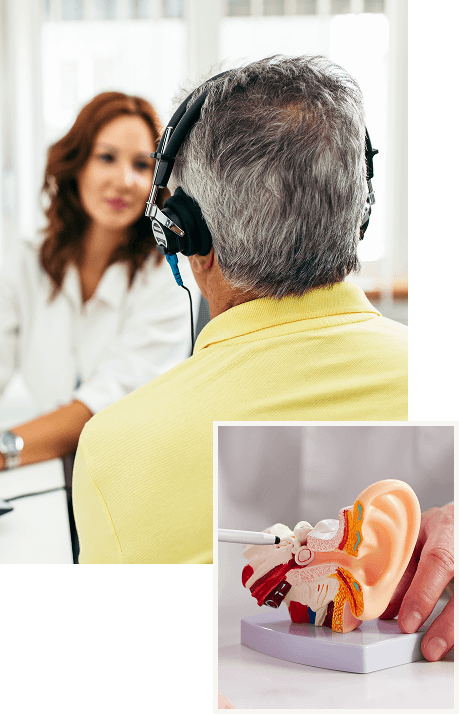
What it’s like: You’ll wear headphones and respond when you hear a tone.
Bone Conduction
What it’s for: Measures how well sound travels through the bones of the skull to the inner ear. This helps identify the type of hearing loss and whether it may involve the middle ear.
What it’s like: A small device rests behind your ear, and you’ll respond when you hear tones.
Speech Testing
What it’s like: You’ll listen to spoken words at different volumes and repeat what you hear.
Speech-in-Noise Testing
What it’s for: Measures your ability to understand speech in the presence of background noise, which is where many people notice hearing trouble first.
What it’s like: You’ll wear headphones, listen for a sentence with background noise present, and repeat the sentence back.
Tympanometry
What it’s for: Checks middle ear function by measuring how the eardrum moves. It can help identify fluid behind the eardrum, pressure imbalance, or reduced eardrum mobility that may affect hearing.
What it’s like: A soft tip seals the ear canal briefly while gentle pressure changes are measured.
OAE Testing
What it’s for: Evaluates inner ear function by measuring a faint response the inner ear produces after sound is played. This can add helpful detail alongside other results.
What it’s like: A small probe plays sounds and records the inner ear’s response while you sit still and listen.
When you notice hearing loss or a change in your hearing, it is normal to worry about what it means. The good news is that many causes are common, manageable, and sometimes even temporary. Testing helps sort out what is most likely and whether anything needs attention sooner rather than later.
Common Causes
A few of the most frequent reasons people notice hearing changes include:
A hearing test doesn’t automatically lead to hearing aids. It helps you understand what’s going on and what steps make sense from here. Sometimes the next step is simple. Sometimes it helps to have a plan.
Next steps may include:
Support for concerns like tinnitus when needed
If ringing in the ears is part of what brought you in, we can talk through what it may be connected to and what can help it feel less disruptive.

Comprehensive hearing testing is available right here in Panama City, FL. Schedule a hearing test appointment when you are ready, and we will take it one step at a time.
Does Medicare cover a hearing test?
Medicare Part B may cover diagnostic hearing and balance exams when they are ordered to help determine whether medical treatment is needed. Medicare generally does not cover routine hearing exams done only for hearing aid fitting. Coverage can also vary if you have a Medicare Advantage plan.
How long does a hearing test take?
Most hearing test appointments are often completed in about 30 to 60 minutes, depending on what testing is needed and whether an ear exam and results review are included.
What is a hearing test called?
Can a hearing test detect tinnitus?
A hearing test cannot “measure” tinnitus directly, since tinnitus is a symptom you experience rather than a sound others can hear. But hearing testing can reveal patterns of hearing change that often travel with tinnitus, and it helps guide the next step in evaluating what may be contributing.
How do you read hearing test results?
Hearing results are usually shown on an audiogram, which maps pitch (low to high) and volume (soft to loud). The most helpful part is understanding what your pattern means for everyday listening, like speech clarity and background noise. We review this with you in plain language during your visit.
Do I need a referral for a hearing test?
It depends on your insurance. Some plans do not require a referral, while Medicare coverage rules for diagnostic audiology often require an order to be covered. If you’re unsure, we can help you confirm what your plan requires before your appointment.
Spanish-speaking support is available in our office. Please let our team know if you would like assistance from our Spanish-speaking translator during your visit.
200 Doctors Drive
Panama City, FL 32405
Mon-Thu: 8:00am – 4:00pm
Fri: 8:00am – 12:00pm
Sat-Sun: Closed
Phone: (850) 784-7722
Fax: (850) 784-6903
kim@gulfcoastfacialplastics.com


