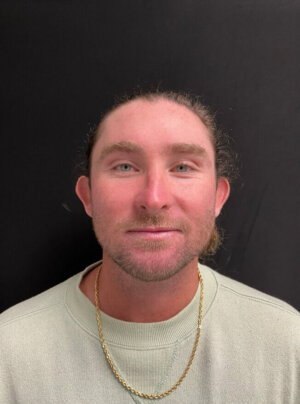
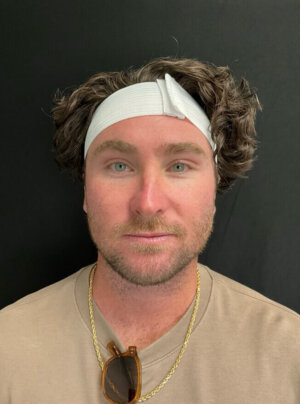
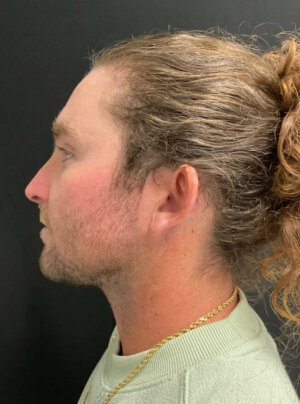
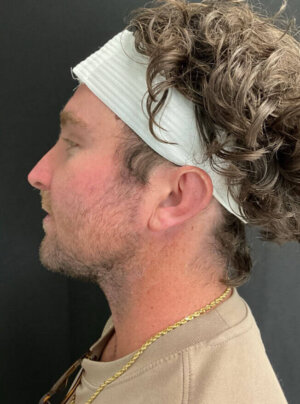
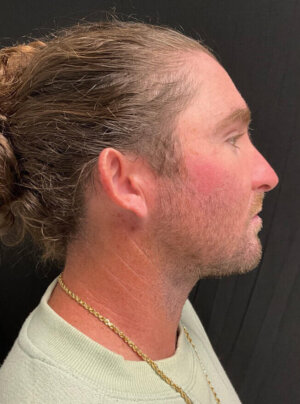
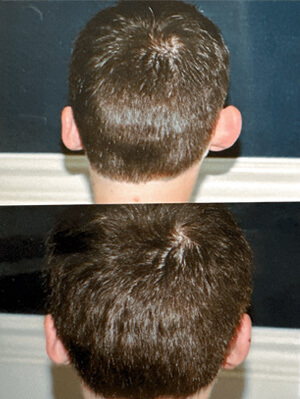
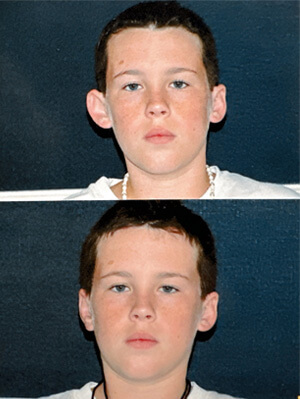
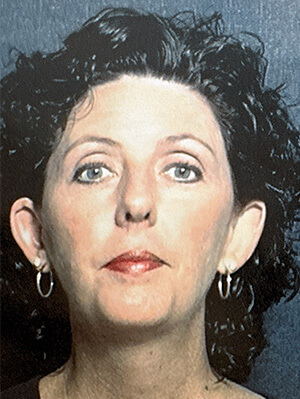
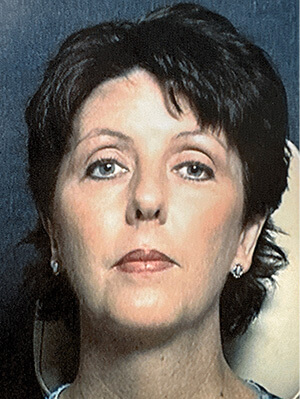
Otoplasty is a simple, lasting way to address prominent or uneven ears and feel more confident from every angle. We use a detail-focused approach to create a natural-looking balance that still feels like you.
Otoplasty is a procedure designed to pin back the ears closer to the head or reduce their size. This procedure can be performed on younger individuals to avoid being teased from others. This results in more natural-looking ears. The otoplasty procedure varies with every patient and their degree of ear deformity.
The operation usually takes about two to three hours and is performed in an outpatient setting under general or local anesthesia with sedation. During the operation, an incision is made behind the ear to hide any obvious marks of surgical intervention. Multiple, strategically placed, sutures are placed to shape the cartilage into normal folds, which were missing pre-operatively. The cartilage is then re-shaped using techniques of scoring, suturing, limited removal or combinations of the three.
The reshaped framework is then repositioned to achieve the best balance with the opposite side and to reduce excessive projection. The skin is redraped, any excess skin is removed, and the incision behind the ear is closed. A gentle pressure dressing is placed to prevent excessive fluid accumulation beneath the skin.
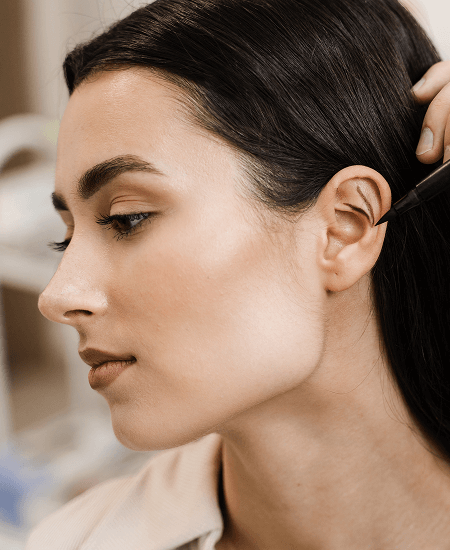
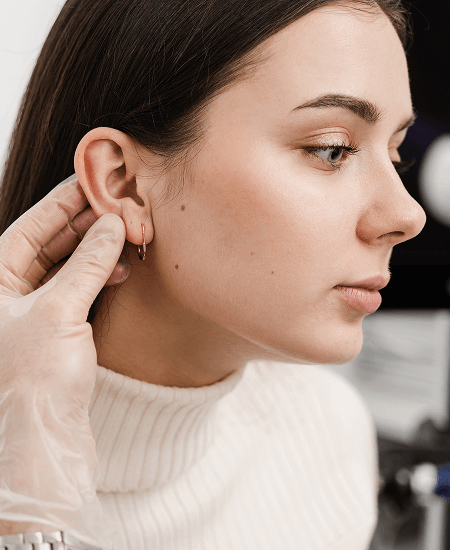
To reduce the swelling or collection of fluid beneath the skin, you’ll have a dressing on your head to put gentle pressure on your ears and maintain their new position. After about two or three days, the dressing will be removed. All of your incisions will be carefully closed with stitches. Some of the sutures will dissolve while other sutures will require removal in 7 to 10 days. You’ll be able to wash your hair as soon as your head dressing is removed on the second or third day after surgery.
Most patients experience very little pain following their procedure. There will be slight discomfort or soreness— mostly when you bump or move your ears. This will be for about a week or two. You’ll notice some swelling in the ears for two to three weeks following surgery. Most bruising will resolve in the first week or two. During this time, you can cover your ears with your hair.
What is ear pinning? 
Ear pinning, also known as otoplasty or ear pinning surgery, is a cosmetic procedure used to reshape or reposition ears that stick out prominently from the head. It’s commonly performed on adults and children who feel self-conscious about protruding or asymmetrical ears. By bringing the ears closer to the head, the procedure provides a natural-looking balance to facial features and boosts confidence.
How does ear pinning work?
During ear pinning surgery (otoplasty), the surgeon carefully reshapes the ear cartilage to position the ears closer to the head. Typically, the procedure involves making small incisions behind the ears, allowing the surgeon to reshape or remove excess cartilage and skin as needed. Sutures are then placed to hold the ears in their new position. The procedure can be done on one ear (unilateral otoplasty) or both ears (bilateral otoplasty), depending on the patient’s specific concerns and goals.
How long does otoplasty take to heal?
Otoplasty recovery time typically lasts about one to two weeks, with most patients returning to normal activities within the first week. Mild swelling, bruising, and discomfort are common for a few days after surgery, and wearing a protective headband is often recommended for at least a week to support proper healing. Strenuous activities or contact sports should be avoided for about four to six weeks to ensure optimal healing and lasting results.
Does otoplasty hurt?
Most patients find otoplasty to be a comfortable procedure, especially since it is typically performed under sedation. Some mild discomfort, soreness, and swelling around the ears can be expected after surgery, but these symptoms are easily managed with prescribed or over-the-counter pain medications. Any initial discomfort usually improves significantly within a few days following the procedure.
Is otoplasty covered by insurance?
Otoplasty is usually considered a cosmetic procedure, meaning it’s typically not covered by insurance. However, if the surgery addresses a functional issue or corrects a congenital deformity impacting hearing, insurance coverage may be possible. Patients should check with their insurance provider beforehand to determine if any coverage or reimbursement is available for their specific situation.
Do otoplasty scars go away?
Otoplasty scars typically become very faint and difficult to notice over time because the incisions are placed discreetly behind the ears. Initially, the scars may appear pink or slightly raised, but with proper care and time, they fade significantly and become nearly invisible. While an otoplasty scar might never completely disappear, most patients are very satisfied with the inconspicuous nature of their scars after healing is complete.
How long do otoplasty results last?
Otoplasty results are generally permanent, providing lifelong improvement in ear positioning and appearance. Once the cartilage has been reshaped and healed in place, the ears maintain their new form indefinitely. It’s important to carefully follow aftercare instructions during recovery to ensure the best and most stable long-term results.
Is there such a thing as ear pinning without surgery?
Non-surgical ear pinning options do exist, but their effectiveness is limited compared to traditional otoplasty. Techniques like specialized adhesive devices or splints can temporarily hold the ears closer to the head, typically in infants or young children whose ear cartilage is still flexible. However, for permanent and effective reshaping or repositioning of prominent ears, ear pinning surgery (otoplasty) remains the most reliable solution.
200 Doctors Drive
Panama City, FL 32405
Mon-Thu: 8:00am – 4:00pm
Fri: 8:00am – 12:00pm
Sat-Sun: Closed
Phone: (850) 784-7722
Fax: (850) 784-6903
kim@gulfcoastfacialplastics.com